
- les PUS
- thématiques
-
- collections
-
- revues
-
- auteurs
- catalogue
- newsletter
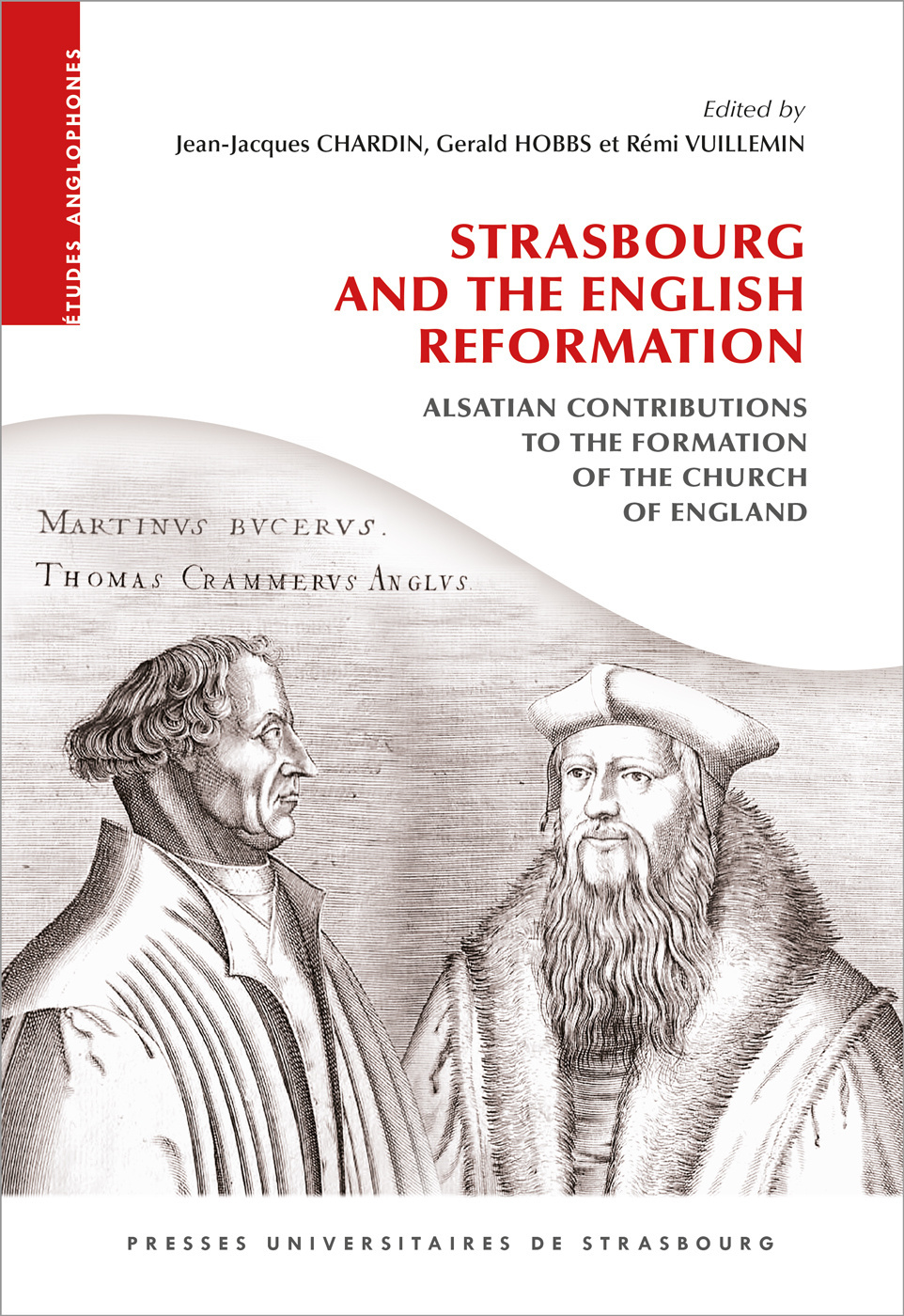
This book sheds new light on the cultural exchanges between Strasbourg and England in the early modern period.
In the sixteenth century, the ties between Strasbourg and the English Reformation were particularly close. Many Marian exiles flocked to the Alsatian city to avoid persecution in England, and Strasbourg became an important centre for the printing of polemical religious tracts. Martin Bucer was invited as Regius Professor of Divinity at Cambridge, and his views on the Eucharist were used in the 1552 revision of the Book of Common Prayer. Bucer’s theology significantly influenced a range of figures from Thomas Cranmer and Stephen Gardiner in their controversy over the doctrine of transubstantiation, to Matthew Parker and Edmund Grindal, both of whom served as Archbishop of Canterbury. Strasbourg church music also found its way across the Channel, notably in the form of a new idiom which combined syllabism and melisma at the end of each musical sentence. Disseminated in England by Miles Coverdale, Jan Laski and Vallerand Poullain, this Strasbourg model of hymnody was eventually adopted by the Church of England.
The present volume offers fresh perspectives on these aspects of Strasbourg and Alsatian reformers’ contributions to the construction of the new Church of England.
Foreword
R. Gerald Hobbs, Jean-Jacques Chardin and Rémi Vuillemin – Introduction
ALSACE AND AN EMERGING EVANGELICAL ENGLAND
R. Gerald Hobbs – Strasbourg Evangelicals and the Emergence of a Reformed Lay Piety in the Church of England;
Annie Noblesse-Rocher – The Community of English Exiles in Strasbourg (1553-1558): The state of the Question;
Susan Royal – The Legacy of Exile in English Protestantism: A Case Study of John Foxe;
W. Geoffrey Day – « For the Better Adorning and Inabling of their Minds »: John Harmar in Strasbourg.
CRANMER AND ALSATIAN THEOLOGIES
Ashley Null – Bucer’s Writings in Cranmer’s Edwardian Eucharistic Papers;
Stuart Ludbrook – The Censura by Bucer and Cranmer’s Prayer Book (1549);
Monique Vénuat – The Dispute over Continental Reformers (Foreign Divines) in the Controversy between Cranmer and Gardiner (1550-51).
STRASBOURG AND ENGLISH HYMNOLOGY
Anne Wolff Hoffmann – The Continental Input into English Hymnody from 1535 to 1610: Echoes of Strasbourg Voices;
Beat Föllmi – Reforming Worship in Sixteenth-Century England and the Influence of the Strasbourg Model on Liturgical Singing.
Conclusion
23,00 € TTC


